
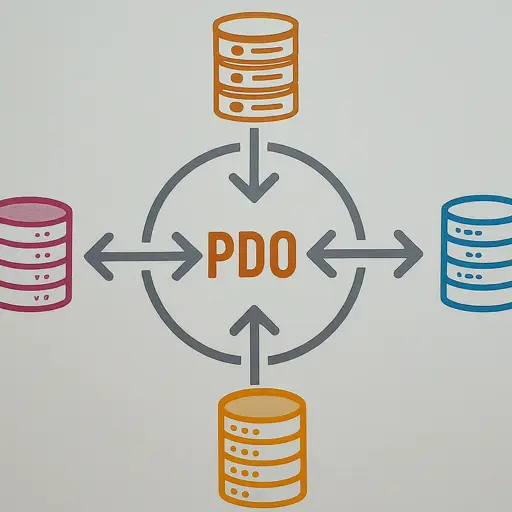

PHP Data Objects (PDO) is a powerful database abstraction layer that provides a consistent interface for interacting with databases in PHP. In this post, we’ll explore why PDO is the preferred choice for database operations and how to use it effectively.
Why Use PDO?
- Security: PDO offers prepared statements, which help prevent SQL injection attacks.
- Portability: It supports multiple database systems, making it easy to switch between different databases.
- Object-oriented interface: PDO provides a clean, object-oriented API for database operations.
- Error handling: It uses exceptions for error handling, allowing for more robust error management.
Getting Started with PDO
First, ensure you have the necessary extensions enabled in your PHP configuration (php.ini):
extension=pdo_mysqlLet’s establish a database connection:
<?php
try {
    $pdo = new PDO("mysql:host=localhost;dbname=mydb", "username", "password");
    $pdo->setAttribute(PDO::ATTR_ERRMODE, PDO::ERRMODE_EXCEPTION);
} catch(PDOException $e) {
    echo "Connection failed: " . $e->getMessage();
}
Performing Database Operations
- Inserting Data
$stmt = $pdo->prepare("INSERT INTO users (name, email) VALUES (:name, :email)");
$stmt->execute(['name' => 'John Doe', 'email' => 'testuser@domain.com']); - Querying Data
$stmt = $pdo->prepare("SELECT * FROM users WHERE id = :id");
$stmt->execute(['id' => 1]);
$user = $stmt->fetch(PDO::FETCH_ASSOC); - Updating Data
$stmt = $pdo->prepare("UPDATE users SET name = :name WHERE id = :id");
$stmt->execute(['name' => 'Test User', 'id' => 1]); - Deleting Data
$stmt = $pdo->prepare("DELETE FROM users WHERE id = :id");
$stmt->execute(['id' => 1]);
Best Practices
- Always use prepared statements to prevent SQL injection.
- Set PD
Conclusion
- PDO provides a secure, efficient, and portable way to interact with databases in PHP. By using
- prepared statements and following best practices, you can write more secure and maintainable
- database code.
Related Resources
If you’re also interested in generating PDFs in PHP, you might find this guide helpful: Generate mPDF in PHP Without Using Composer. It offers insights into creating PDFs without relying on Composer, which can be a valuable addition to your PHP toolkit